
Opinion By: Dinesh Naidu, Director (Knowledge) at the Chandler Institute of Governance
By: Dinesh Naidu
Director (Knowledge) at the Chandler Institute of Governance
Dinesh Naidu is the Director of Knowledge at the Chandler Institute of Governance (CIG), an internationalnon-profit organisation that works with governments worldwide to build the capabilities for a strong andefficient public sector.
A New Story for Africa
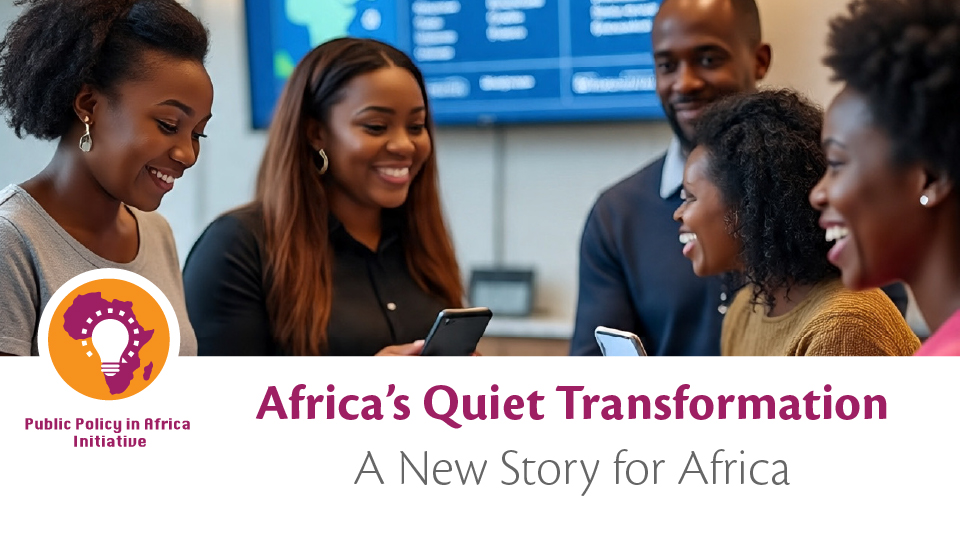
What once meant hours in line at a government office can now be done in minutes on a phone. Thanks to investments in digital governance, an estimated 134 public services from registering a business to renewing a driver’s license can be done on the National e-Government Portal. Surprisingly, this is not a case study from a high-tech hub in Europe or Asia – it’s happening right now in South Africa.
And South Africa is not alone – its experience reflects a wider, quieter shift across thecontinent.
For too long, the story of Africa’s governance is often told through its challenges, characterised with words like fragility, instability, and dependency. These challenges are real and deserve attention. But they are not the whole story. For the past few years, the region’s governments have invested time, resources and political will to strengthen governance systems.
Change is Possible
Africa’s slow but steady shift is evident in the Chandler Good Government Index (CGGI) 2025. Now in its fifth edition, it shows that while the continent still faces serious challenges, it is also making modest but steady gains. After dipping during the pandemic years, Africa’s governance scores picked up again in 2024 – 2025. Half of African countries measured by the CGGI have improved in leadership, administration, or resilience since 2021.
In fact, several governments are outperforming global peers through deliberate investments in governance capabilities, with two African countries ranked in the top half of the CGGI.
That’s not just numbers on a chart — it’s evidence that change is possible and happening. Improvements in the Strong Institutions pillar stand out, reinforcing the notion that change does not happen dramatically overnight. It takes time, and these incremental gains are early signs of the continent’s growing capacity.
From Rankings to Realities
Part of this momentum lies in how governments are rethinking capability itself. It is no longer just about policy intent, but about execution – whether institutions have the systems, talent, investments and tools to translate promises into results. Investments in transparency, service delivery, and regulatory reform are part of the story. Just as critical are stable leadership, a focus on delivery, the rule of law, and the ability to adapt and learn. These factors rarely make headlines, yet they are quietly reshaping how African governmentsengage with their people and how citizens experience governance in daily life.
South Africa offers clear illustrations of how governance capability translates into better outcomes for citizens. Earlier in September this year, the government announced a roadmap to introduce a single digital ID system, centralising access to public services. Part of a broader Digital Transformation Roadmap, the initiative aims to reduce ID fraud, improve service delivery and allow for the secure storage and access to personal documents.
Its G20 presidency also tells a similar story: leading into this year’s summit, digital public infrastructure and Artificial Intelligence have been prioritised on the agenda. This led to the establishment of the G20 Task Force on Artificial Intelligence and the G20 Digital Economy Working Group, decisions that seek to advance responsible growth for both the public and private sectors.
Not to be left out, other governments across the continent have found new ways to lead with purpose and deliver with impact. Mauritius, ranked 51 st in the CGGI 2025, has built a stable regulatory environment attractive to investors. Rwanda has harnessed digital governance and long-term planning to implement Irembo, an initiative that has accelerated growth despite limited resources. Botswana remains a model of prudent financial stewardship, underpinned by good governance of its resources and ongoing economic initiatives.
These examples underscore a simple truth: progress comes from choices to invest in capability.
Priorities
For Africa’s quiet transformation to endure, three priorities stand out. First, Africa-led governance networks must grow stronger. Progress accelerates when leaders share lessons and hold one another accountable across borders. Peer exchange can help embed reforms and protect them from being rolled back.
Second, governments must invest in the people who make institutions work. No reform lasts without capable people. Modernising recruitment, expanding training, and nurturing the next generation of leaders will ensure that progress does not hinge on individuals but becomes embedded in resilient institutions.
Third, donors must change their approach, moving beyond aid dependency to enabling capacity. More than investing in short-term projects, external partners add greater value when they strengthen institutions, data systems, and long-term governance machinery — the foundations citizens rely on every day.
Looking Ahead
As South Africa welcomes the world to Johannesburg this November, the G20 is more than a summit – it is a stage for Africa to tell a new story. A story not defined by fragility, but by resilience; not by dependency, but by capability.
As South African President Cyril Ramaphosa noted, “This highlights the growing importance of the continent in global economic, political and environmental discussions.”
Africa’s quiet transformation is already unfolding in strong institutions, smarter governance and more responsive leadership. The task now is to keep building, to keep learning, and to keep choosing capability over complacency. If Africa sustains this course, the continent will not only shape its own destiny – it will shape the future of global governance itself.